
Predictive Analytics in Mortgage Lending: Smarter Decisions, Faster Closings
In today’s fast-evolving digital mortgage landscape, data is the new currency. With the rise of predictive analytics, lenders are no longer making decisions based solely on historical data or gut instinct — they’re leveraging powerful algorithms to forecast borrower behavior, assess risk in real-time, and close loans faster than ever before.
The Return of Refinancing: Is 2025 the Year of the Refi Boom?
As of October 2025, the U.S. mortgage market is experiencing a notable resurgence in refinancing activity. This uptick is driven by several factors, including declining mortgage rates, increased home equity, and shifting economic conditions.
eMortgage Predictions for 2026: What’s Next in Digital Lending
Digital lending has moved from “nice-to-have” to mission-critical for mortgage lenders. As we head into 2026, macro forces (interest-rate movement and housing demand), rapid product innovation, and regulatory focus will reshape how eMortgage platforms compete, originate loans, and keep borrowers happy.
How Automation Cuts Loan Costs and Improves ROI for Lenders
In an increasingly competitive mortgage market, lenders are under constant pressure to reduce operational costs, speed up loan processing, and deliver exceptional borrower experiences. The solution? Automation.
How Transparency Builds Trust in Online Mortgage Platforms
In today’s fast-paced digital lending landscape, trust is the foundation of every successful online mortgage platform. Borrowers are increasingly turning to eMortgage solutions for convenience, speed, and efficiency—but these benefits mean little if the process feels opaque or uncertain. Transparency, therefore, has emerged as a key factor in building borrower confidence and long-term loyalty.
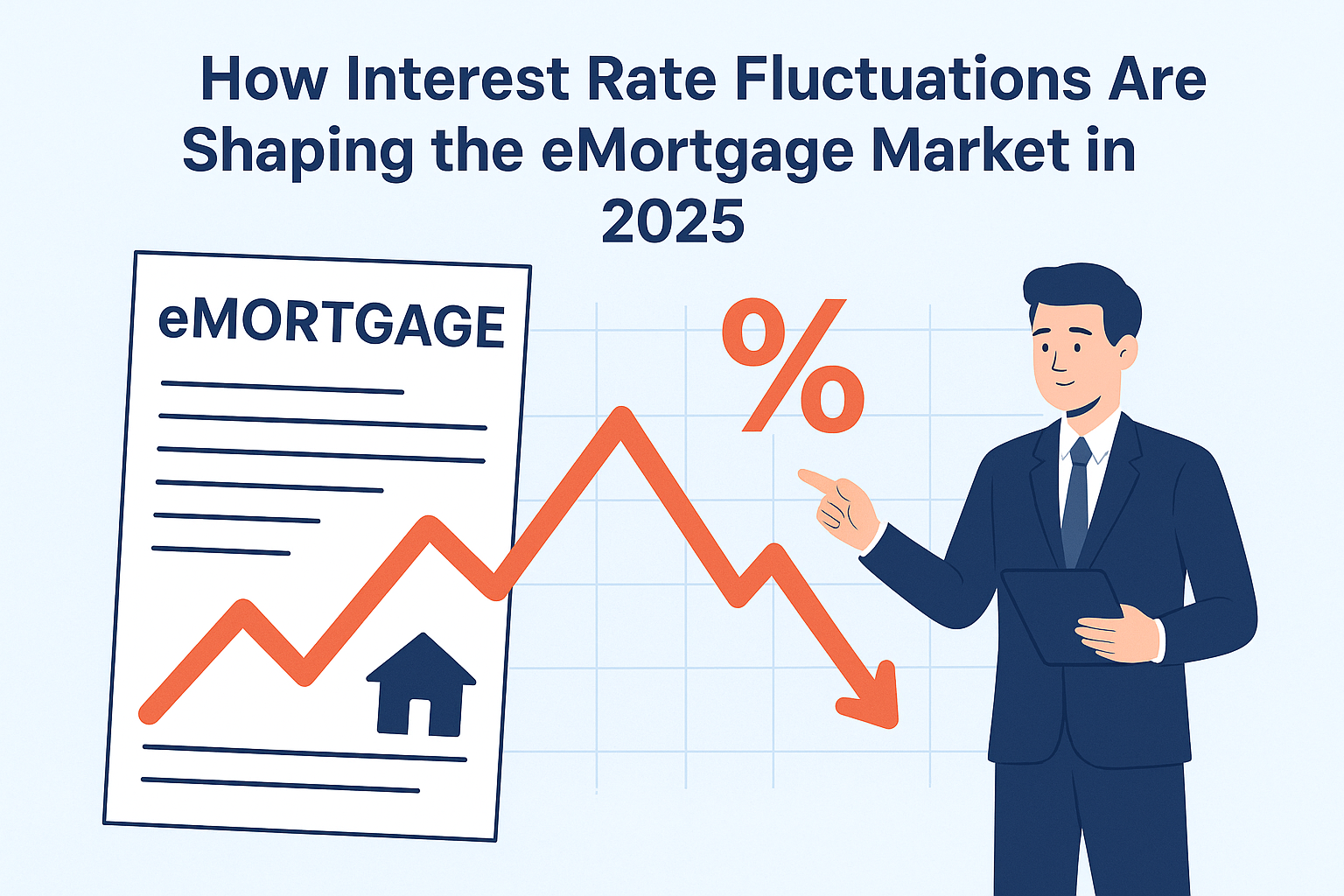
How Interest Rate Fluctuations Are Shaping the eMortgage Market in 2025
Interest-rate moves in 2025 are doing more than change monthly payments — they’re reshaping the whole digital mortgage ecosystem. From borrower behavior and refinance demand to lender economics and technology investment, rate volatility has become a central driver of eMortgage strategy.

U.S. Housing Market 2025: Digital Tools Driving the Next Mortgage Wave
2025 is shaping up as a transitional year for U.S. housing and mortgage finance: mortgage rates have eased a bit from their 2022–24 peaks, giving hope to buyers and refinance seekers, while overall home-sales activity remains sluggish because inventory constraints and affordability still bite.

The Rise of Digital-Only Mortgage Lenders: What It Means for EMORTGAGE COMPANY
The mortgage lending landscape in the U.S. is undergoing a significant digital transformation. While traditional banks and mortgage lenders still dominate large portions of originations, a new class of digital-only mortgage lenders — i.e., firms that operate primarily through online channels, with minimal branch footprint and highly automated workflows — are gaining traction.

U.S. Housing Demand & eMortgage Growth
The U.S. housing market in 2025–2026 is characterized by constrained supply, resilient purchase demand (especially from first-time and younger buyers), and mortgage-rate-driven shifts in borrower behavior.

Digital vs. Paper Closings: Choosing the Right Path for Today’s Mortgage Market
Closing a mortgage is the pivotal step where a borrower’s promise becomes legally enforceable. For a lender like EMORTGAGE COMPANY, the method of closing—paper (traditional) or digital (eClosing / eMortgage)—has real implications: speed to funding, cost, borrower experience, compliance, and investor delivery.

The Role of APIs in Digital Mortgage Platforms
In today’s rapidly evolving mortgage landscape, Application Programming Interfaces (APIs) are playing a transformative role in how digital mortgage platforms operate. From streamlining loan processing to enhancing borrower experiences, APIs are now at the heart of innovation for U.S.-based lenders and eMortgage providers.

The Future of Mortgage Closings: eSignatures Lead the Way
In today’s fast-paced housing market, where borrowers expect convenience, speed, and transparency, eSignatures have become the core enabler of the digital mortgage revolution. They bridge the gap between traditional, paper-heavy closings and a seamless, tech-driven mortgage process.

eMortgage Adoption in 2025: Where Lenders Stand (with Data)
The mortgage industry is gradually shifting from analog to digital, and by 2025 the movement toward eMortgages is gaining real traction. An eMortgage is one in which the promissory note (and in many cases associated documents) is created, stored, transferred, and managed electronically rather than via paper.

Why Some Borrowers Still Prefer Traditional Closings
In today’s digital-first mortgage landscape, electronic closings (eClosings) are quickly becoming the standard. With the convenience of signing documents online, faster processing times, and reduced paperwork, eMortgages are reshaping the lending experience in the U.S.

AI-Driven Risk Assessment Tools for Lenders
Lenders increasingly depend on automated decisioning to underwrite loans faster, reduce costs, and expand access. For U.S. mortgage lenders — and especially digital-first or eMortgage companies — modern AI-driven risk assessment tools are central to scaling while managing credit risk.

Why Some Borrowers Still Prefer Traditional Closings
The mortgage industry in the U.S. is rapidly shifting toward digital solutions, from eMortgages to fully online closings. Yet, despite the convenience, speed, and efficiency of digital platforms, a significant number of borrowers still prefer the traditional, paper-based closing process.

Paper vs Digital: Which Closing Is Better?
For decades, the traditional mortgage closing process has involved stacks of paper, multiple in-person meetings, and a heavy reliance on manual signatures. While this system has worked, it is no secret that borrowers and lenders alike have long found it overwhelming, time-consuming, and often inconvenient.

What Borrowers Expect from eMortgage Platforms in 2026
The mortgage industry has been undergoing a rapid digital transformation over the past few years. As 2026 approaches, borrowers in the U.S. are no longer satisfied with partial digitization—they expect fully streamlined, secure, and user-friendly eMortgage platforms.

Future of eMortgages: Predictions for 2026
The digital mortgage shift that accelerated during the pandemic has matured into structural change. By the end of 2025 the industry has cleared many legal and operational hurdles — and 2026 looks set to be the year eMortgages move from “early adoption” to mainstream production for many lenders.

Blockchain & Smart Contracts in Housing Finance: Revolutionizing the Mortgage Industry
In recent years, blockchain technology and smart contracts have emerged as transformative forces across industries—from banking to supply chain management. Housing finance, one of the most document-intensive and traditionally slow-moving sectors, is now beginning to experience the benefits of these innovations.