
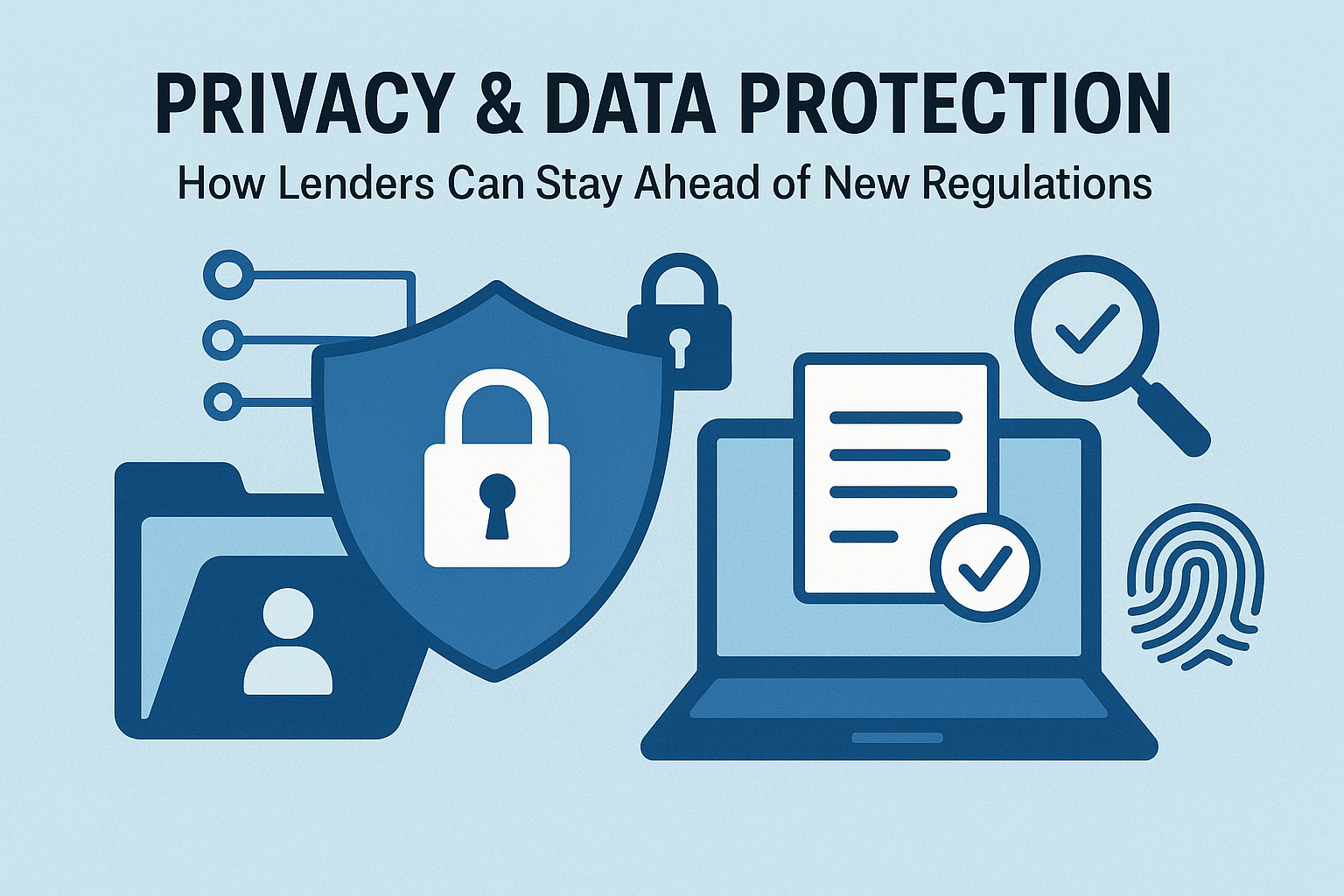
Privacy & Data Protection: How Lenders Can Stay Ahead of New Regulations
Lenders face rising scrutiny around data privacy. This guide explains key regulations and practical steps to protect borrower information, strengthen security systems, and stay compliant in an evolving digital mortgage landscape.
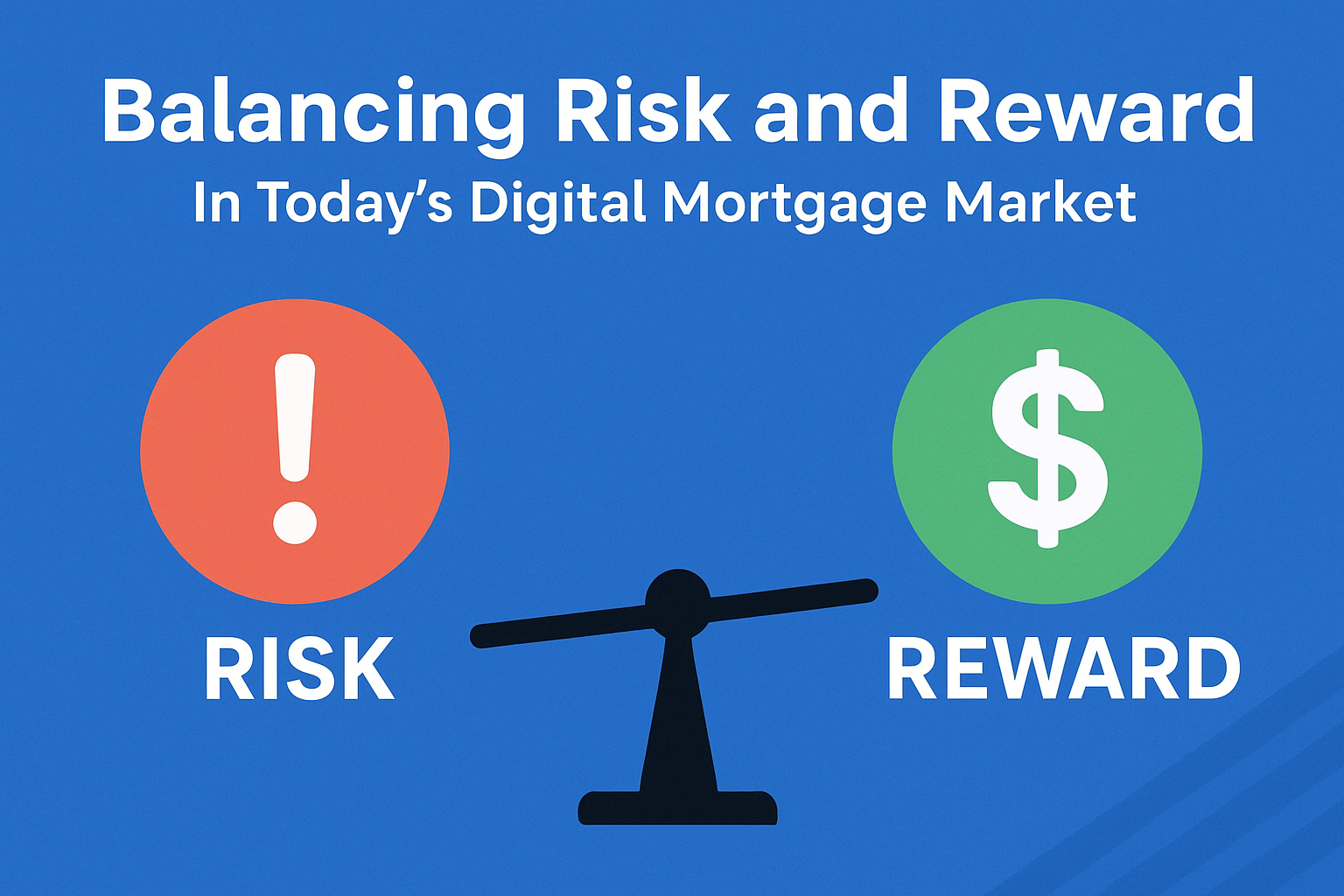
The Digital Mortgage Trade-Off: High Rewards, Higher Risks
Digital mortgage demand is rising, offering speed and growth opportunities. But lenders must balance these rewards with higher regulatory scrutiny, cyber risks, and the need for strong, secure technical infrastructure.
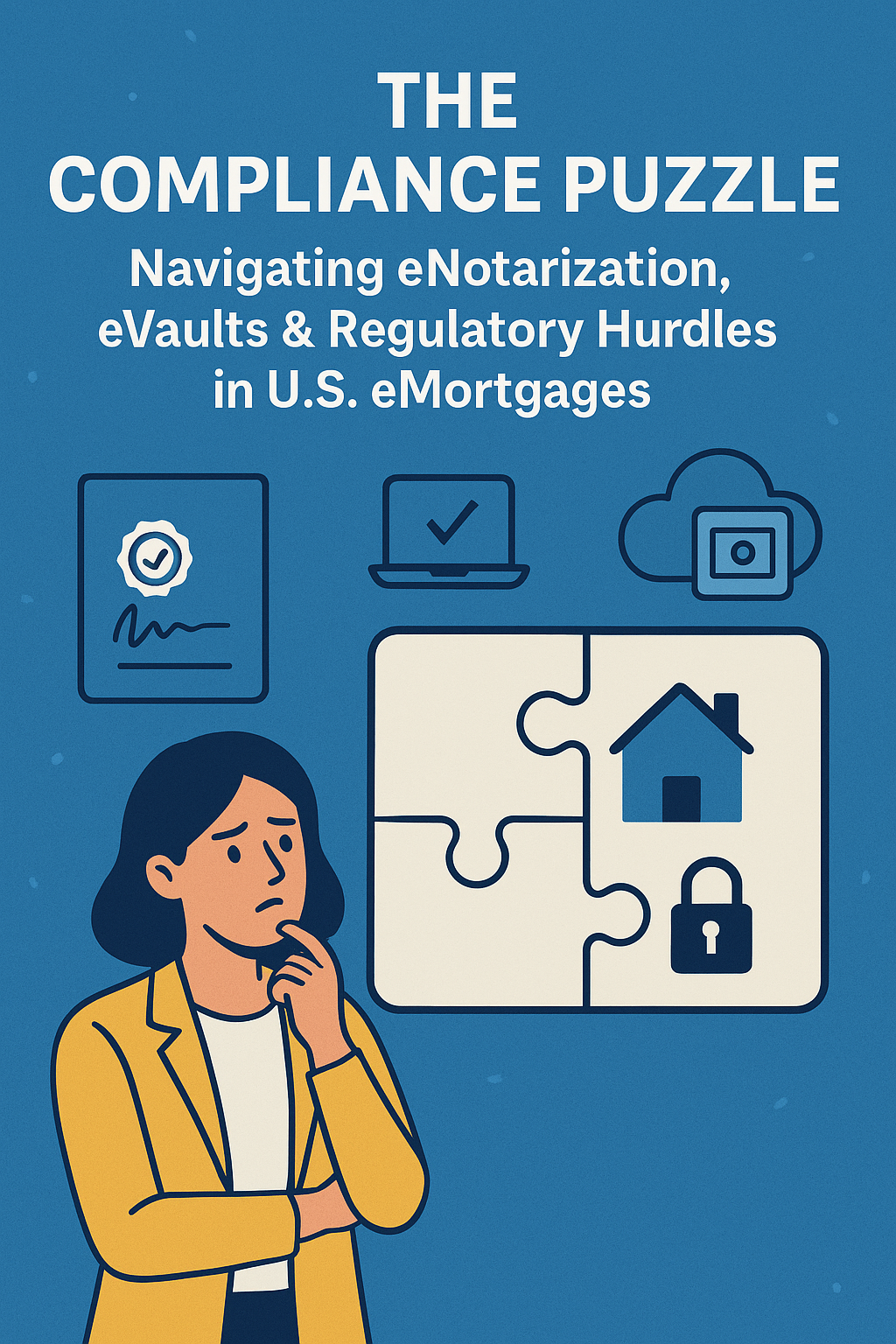
The Compliance Puzzle: Navigating eNotarization, eVaults & Regulatory Hurdles in U.S. eMortgages
Understand the key compliance challenges in U.S. eMortgages, including eNotarization rules, eVault requirements, and regulatory hurdles, and learn how lenders can confidently navigate the digital mortgage landscape.
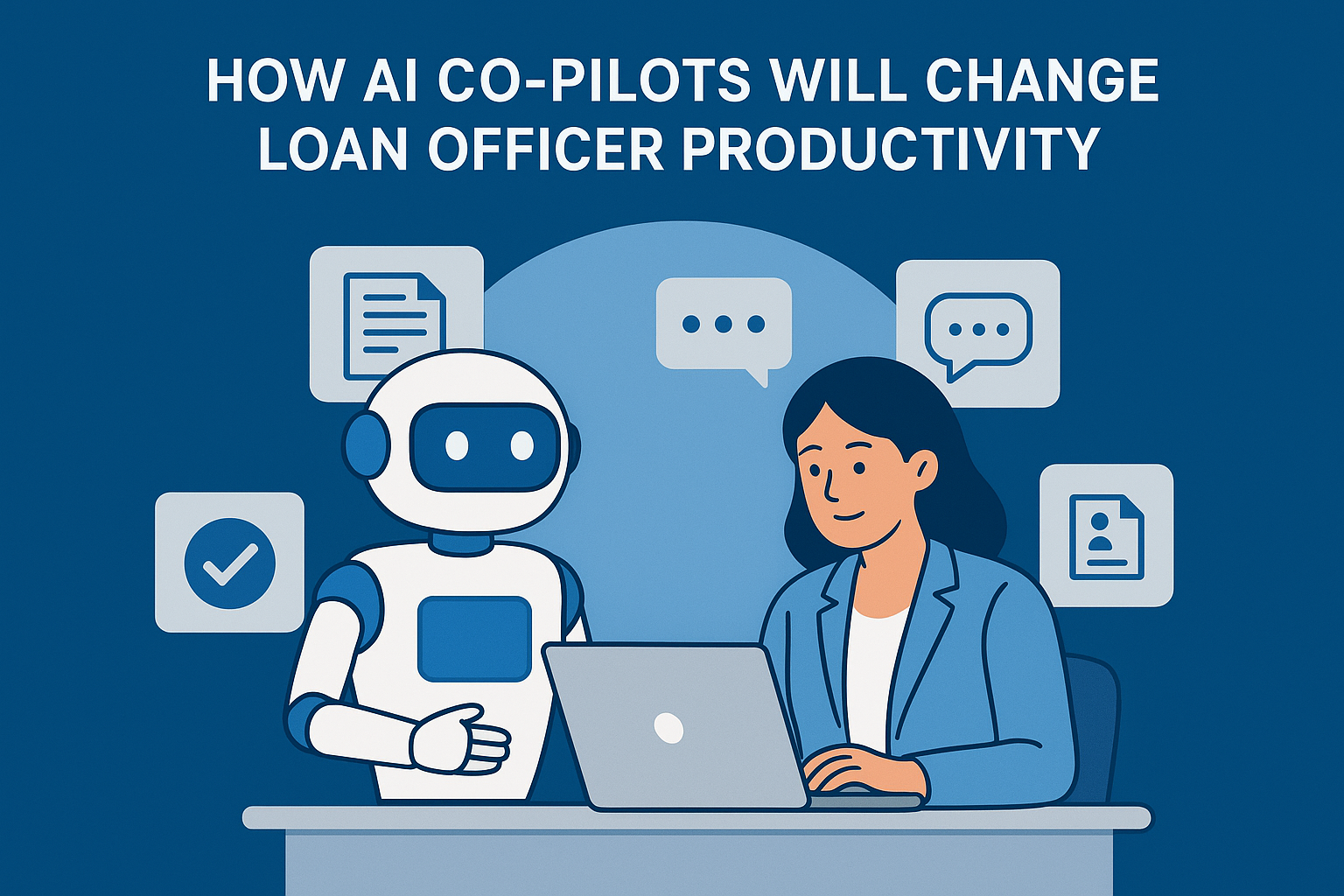
How AI Co-Pilots Will Change Loan Officer Productivity
AI co-pilots help loan officers work faster by automating document review, communication, and compliance checks—reducing errors, boosting productivity, and creating a smoother, more personalized borrower experience.
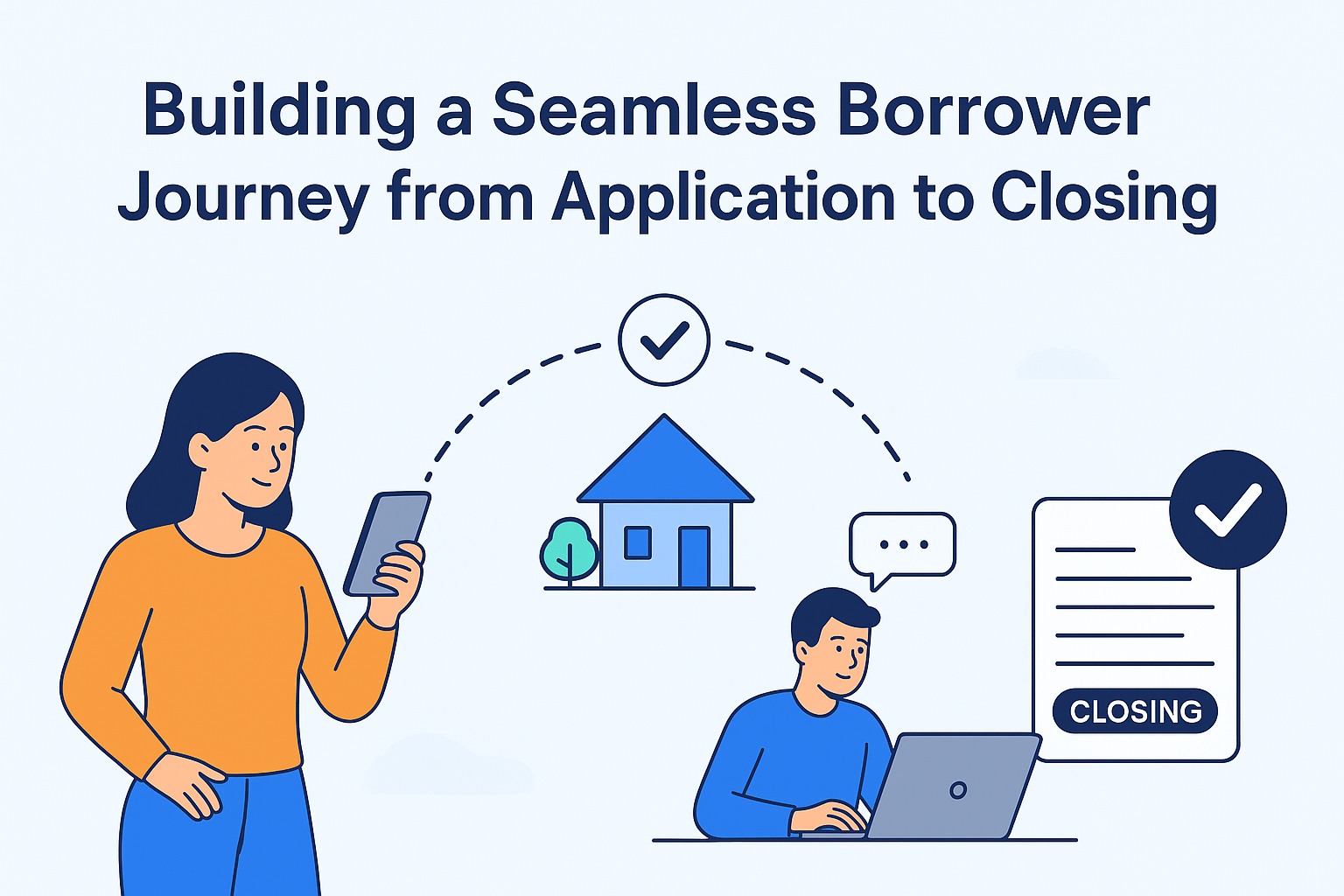
Building a Seamless Borrower Journey from Application to Closing
A seamless borrower journey connects application, underwriting, and closing into one digital workflow—reducing delays, improving communication, and delivering a faster, transparent, and stress-free mortgage experience from start to finish.
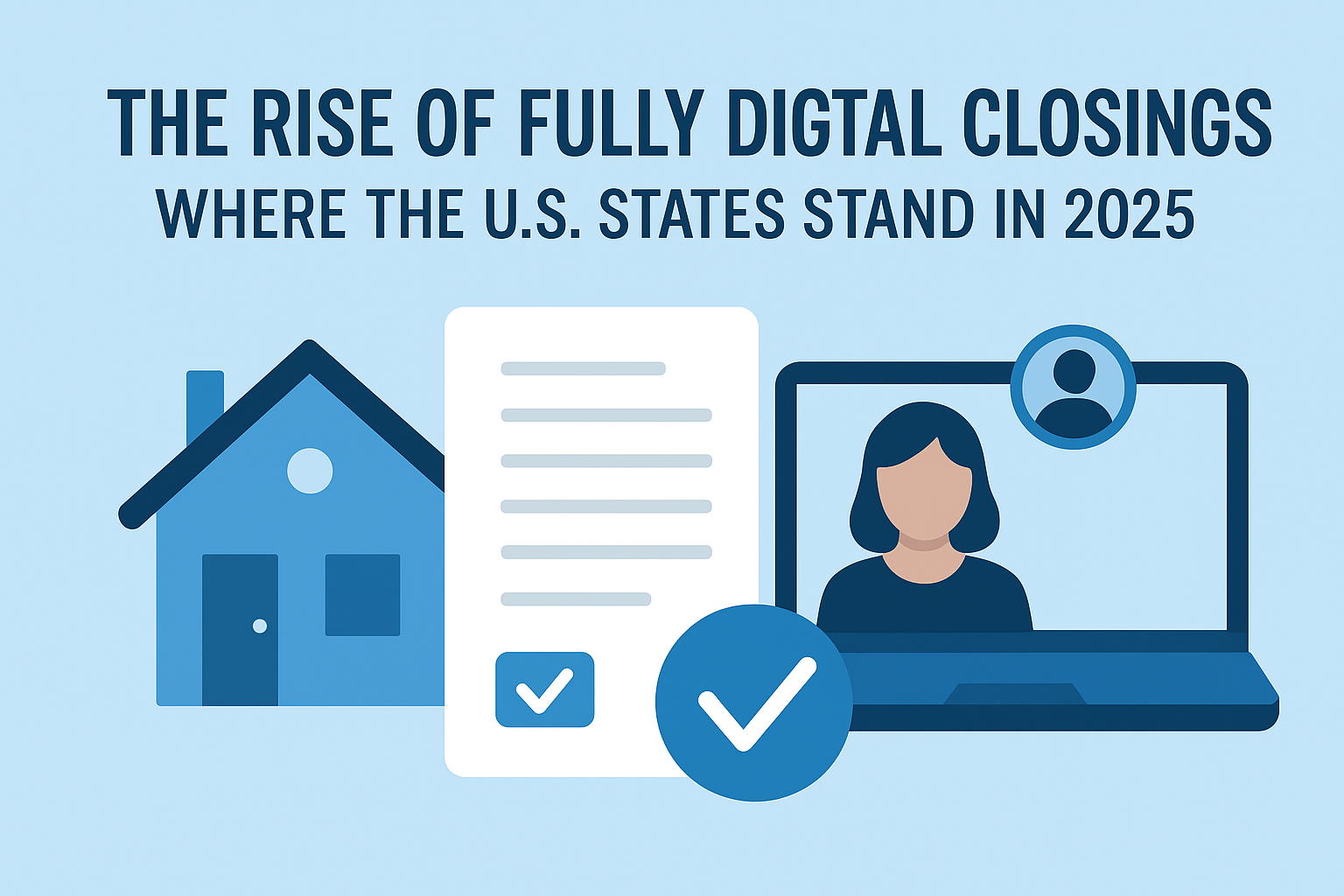
The Rise of Fully Digital Closings: Where the U.S. States Stand in 2025
In 2025, most U.S. states support fully digital closings through Remote Online Notarization and eRecording, making mortgage transactions faster, easier, and more accurate while reducing paperwork, delays, and overall costs.
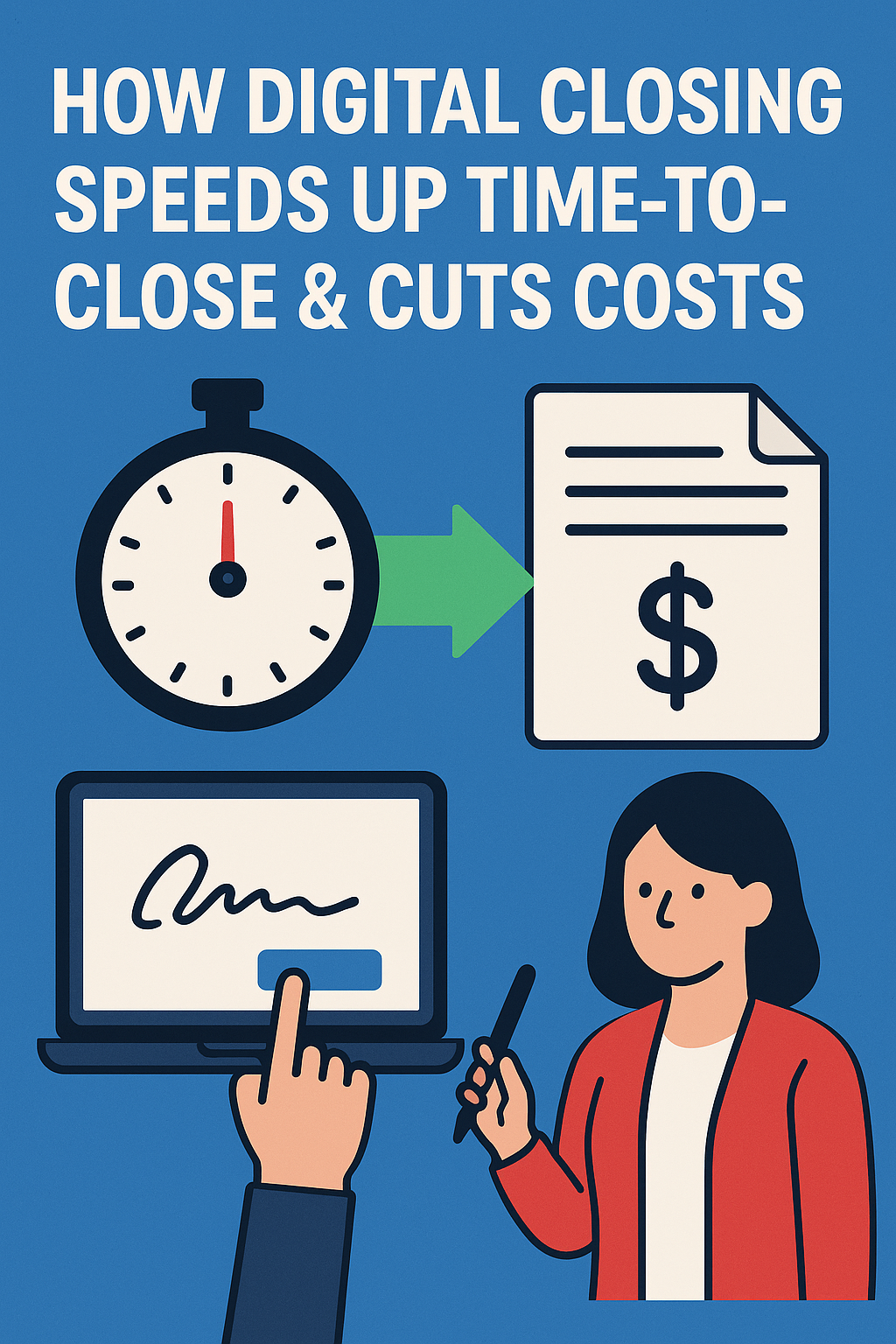
How Digital Closing Speeds Up Time-to-Close & Cuts Costs
Digital closings streamline the mortgage process by replacing paper, reducing manual errors, enabling remote signings, and accelerating time-to-close — helping lenders cut operational costs and improve borrower experience.
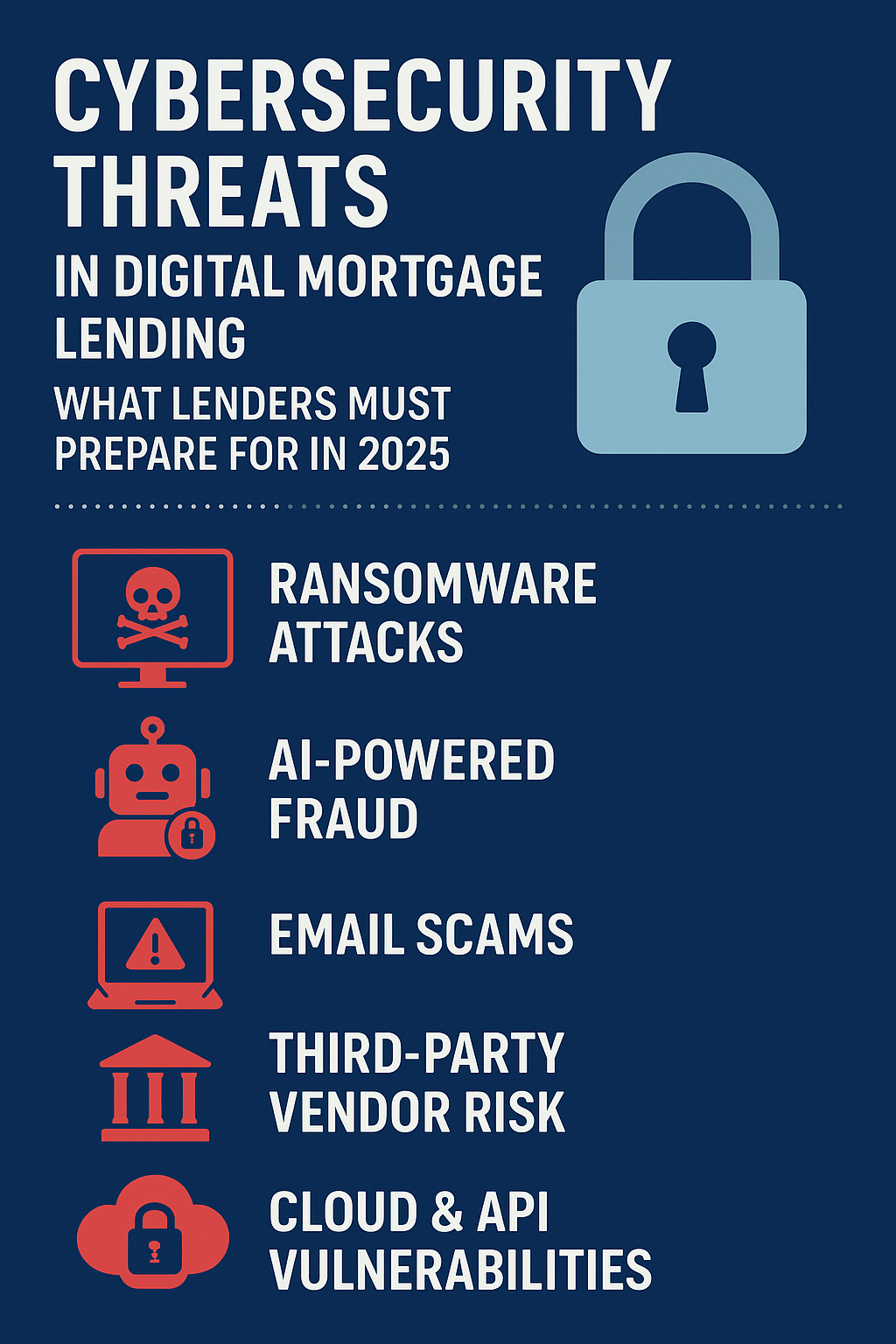
Cybersecurity Threats in Digital Mortgage Lending: What Lenders Must Prepare for in 2025
As the mortgage industry goes fully digital, cybersecurity has become just as important as interest rates, customer experience, or speed of closing. With more eClosings, online applications, and digital document transfers, cybercriminals now see mortgage companies as high-value, high-impact targets.
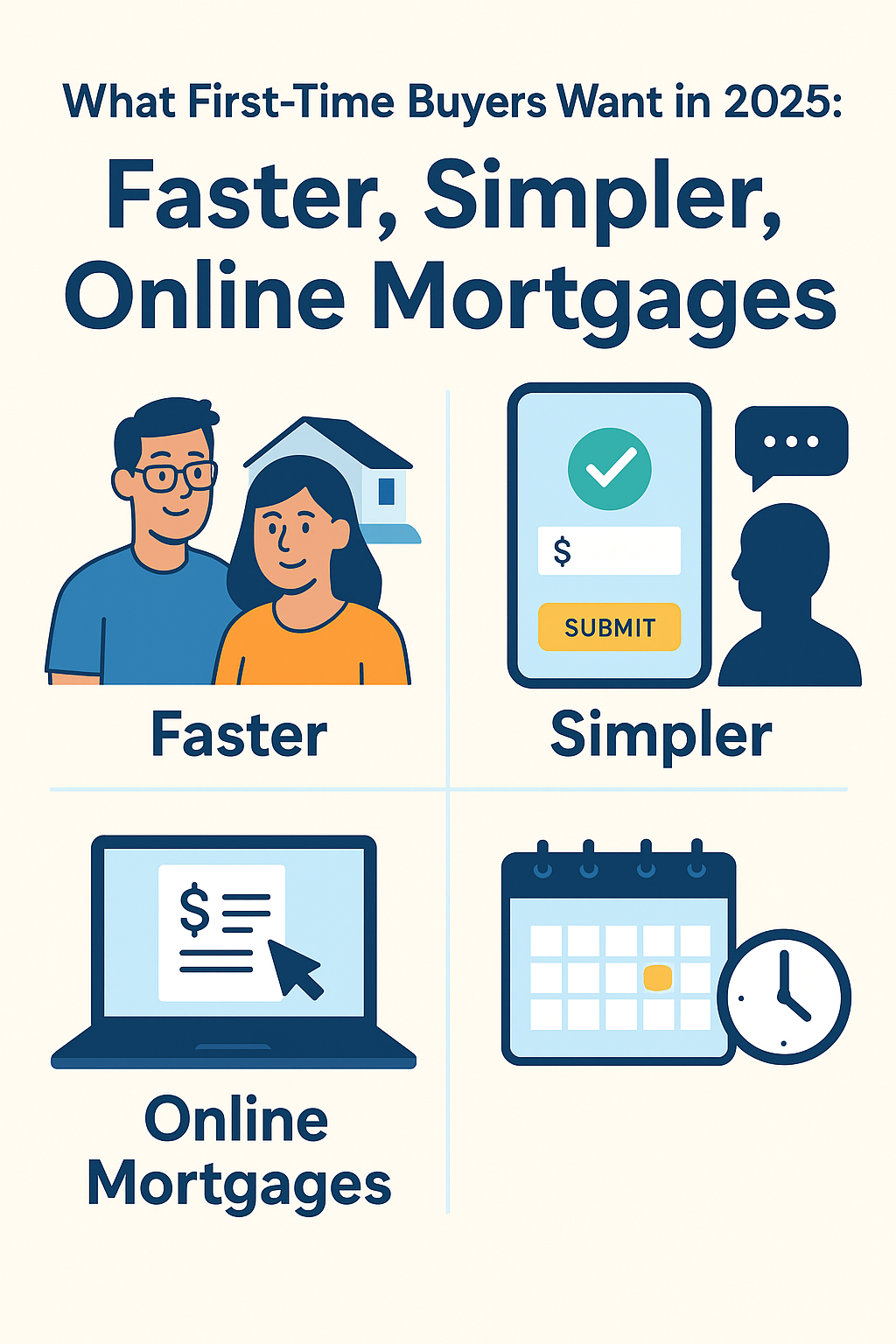
What First-Time Buyers Want in 2025: Faster, Simpler, Online Mortgages
First-time buyers in 2025 want faster, simpler, fully online mortgages with quick approvals, transparent costs, mobile-friendly applications, and convenient eClosings backed by trusted digital security.
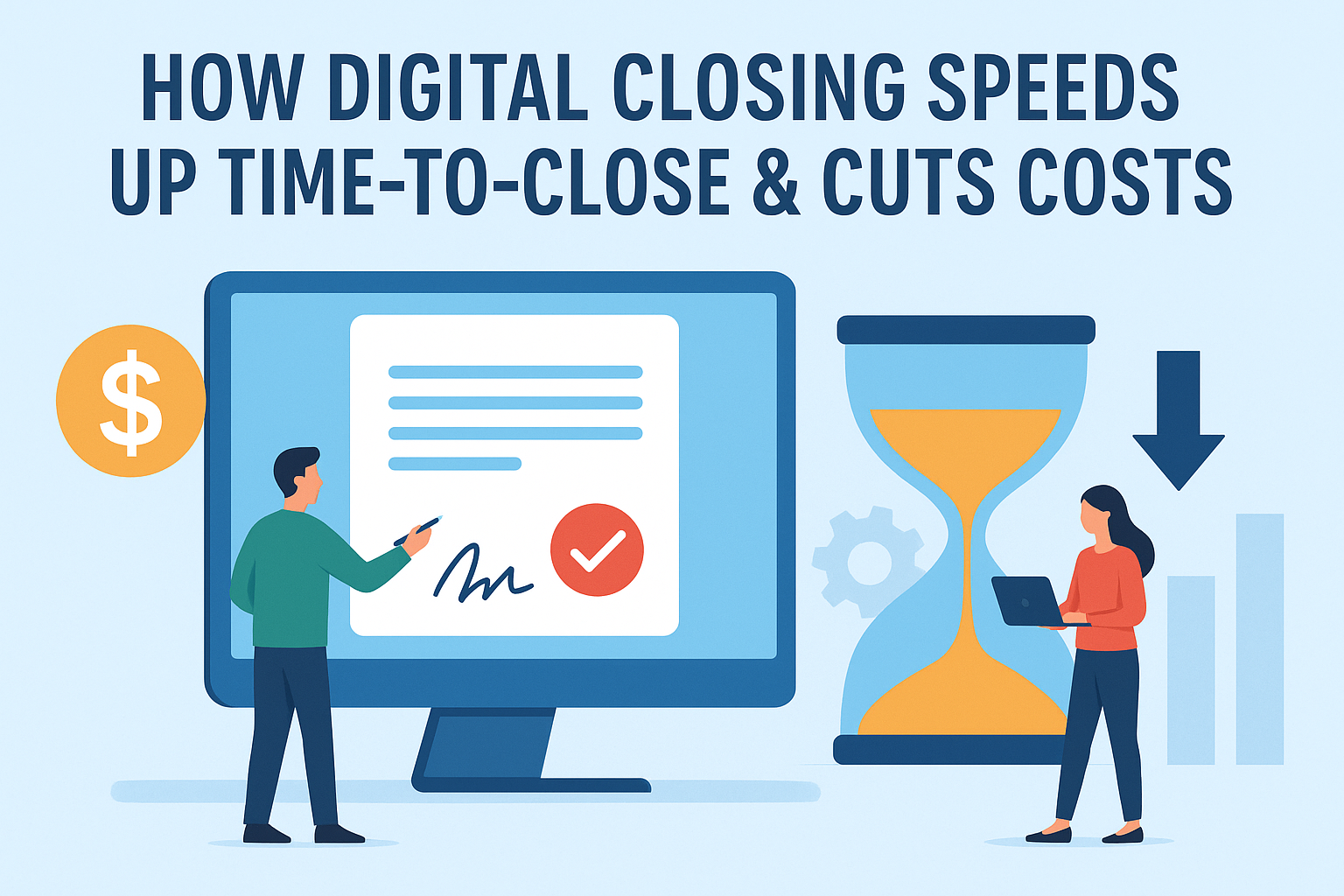
How Digital Closing Speeds Up Time-to-Close & Cuts Costs
Digital closing streamlines the mortgage process by automating paperwork, enabling eSignatures, and reducing errors—helping lenders close loans faster, lower operational costs, and deliver a smoother borrower experience.
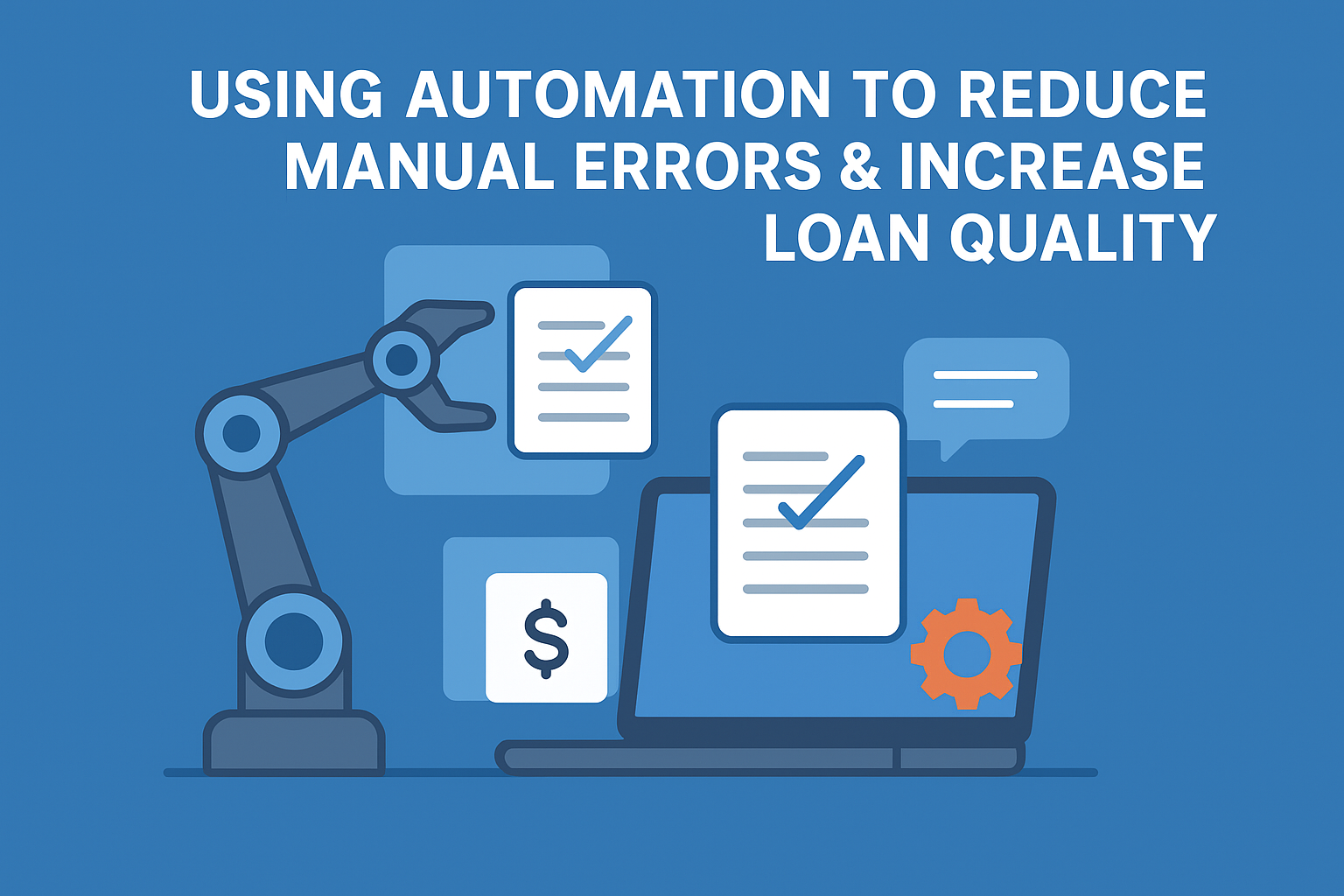
Using Automation to Reduce Manual Errors & Increase Loan Quality
Automation helps lenders reduce manual errors, improve data accuracy, and enhance loan quality. By streamlining workflows and validating documents, lenders achieve faster approvals, stronger compliance, and more reliable loan manufacturing.
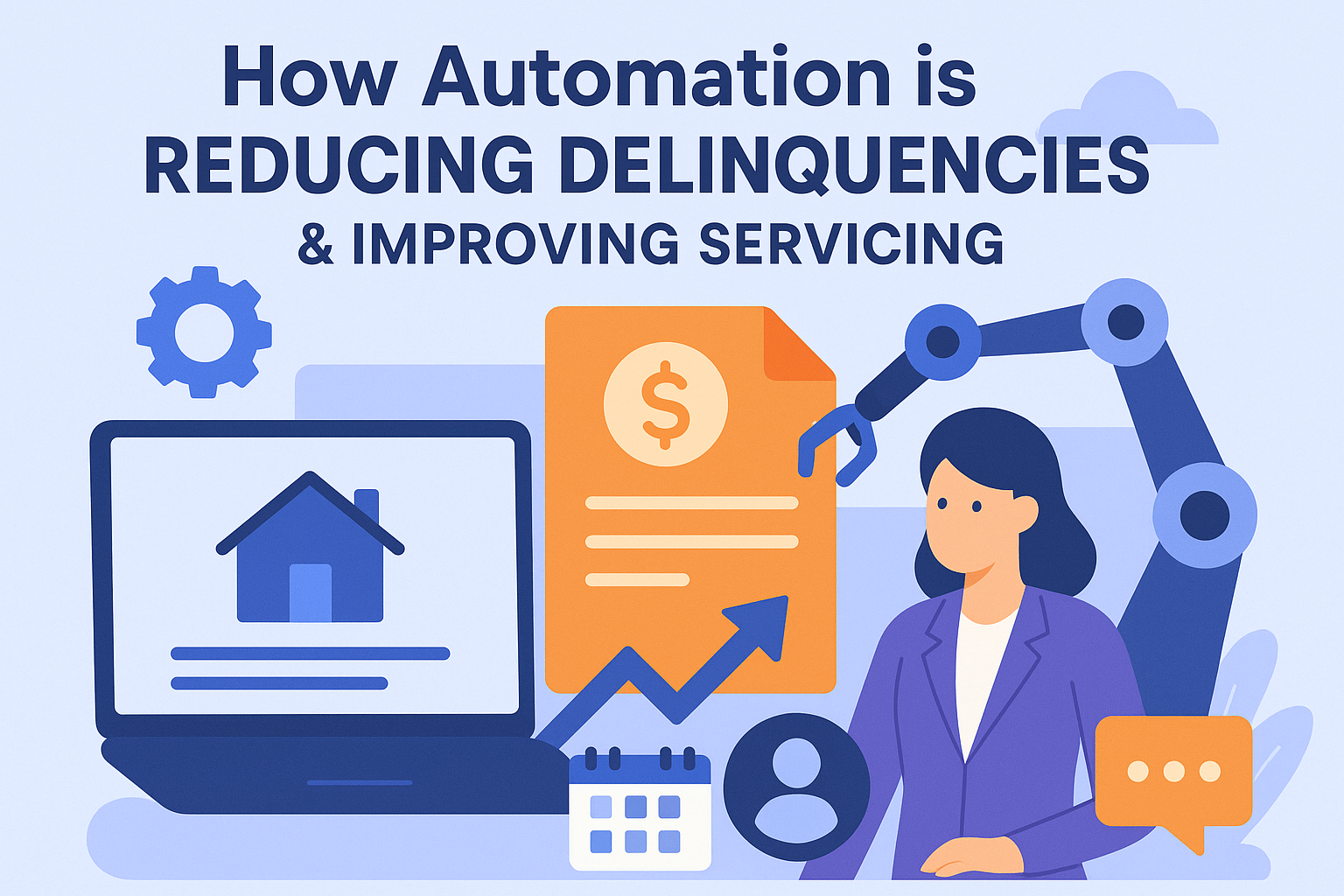
How Automation is Reducing Delinquencies & Improving Servicing
A modern, flat-style illustration showcasing how automation improves mortgage servicing. The design features a robotic arm, digital documents, payment icons, and a laptop—symbolizing reduced delinquencies, smarter workflows, and enhanced borrower communication.
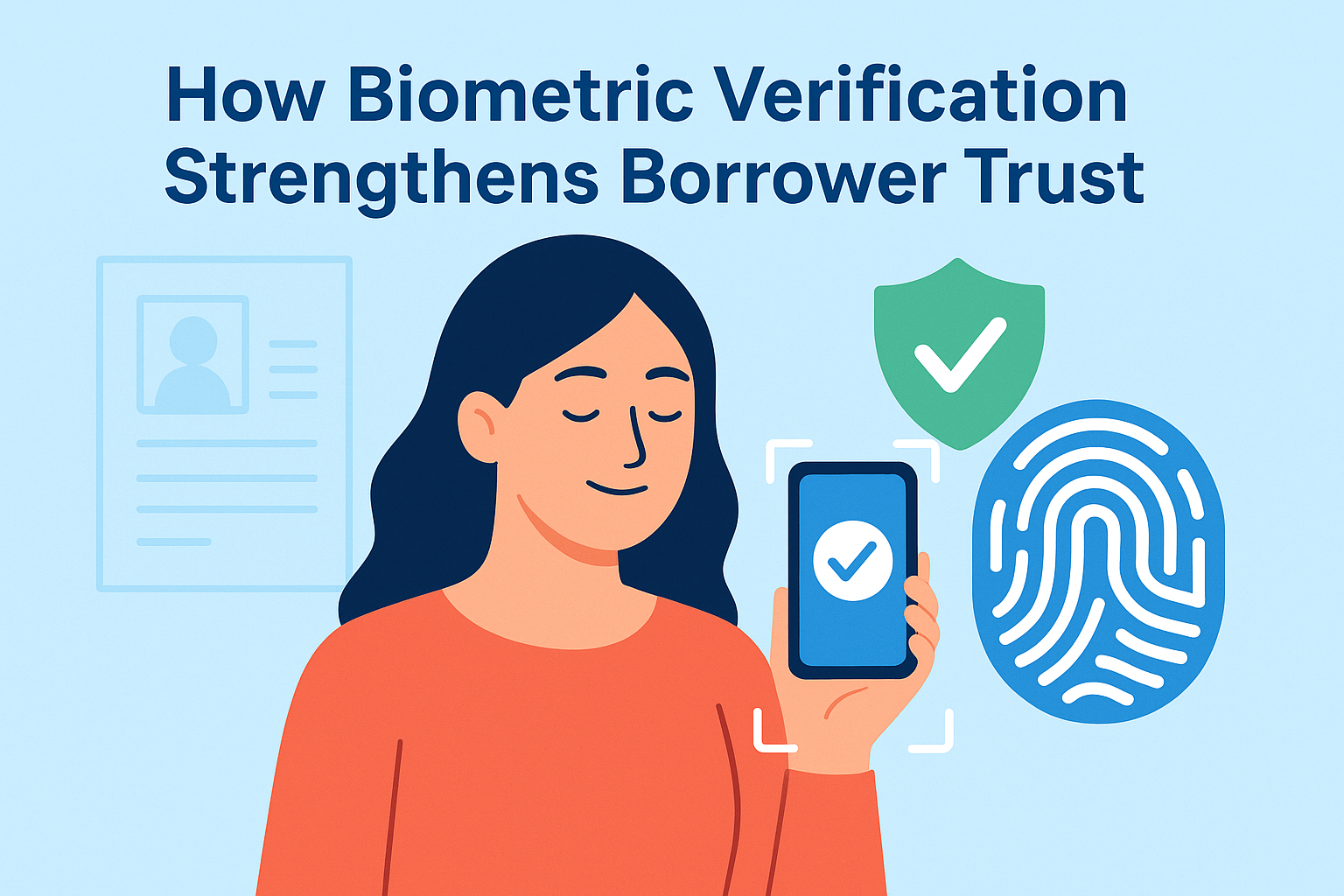
How Biometric Verification Strengthens Borrower Trust
Biometric verification boosts borrower trust by providing fast, secure identity checks using fingerprints or facial recognition, reducing fraud risks and giving lenders and borrowers greater confidence in every digital mortgage transaction.
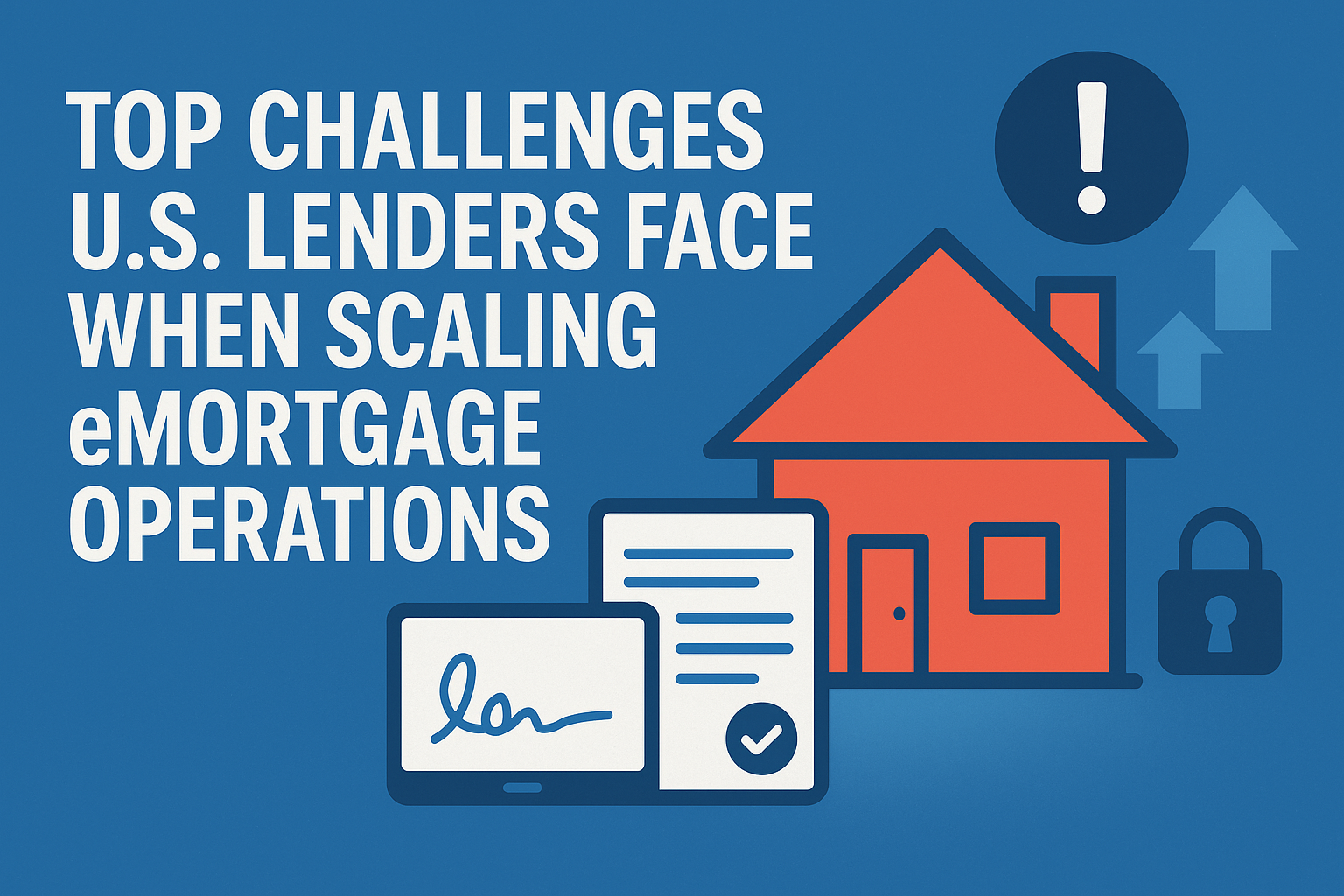
Top Challenges U.S. Lenders Face When Scaling eMortgage Operations
U.S. lenders face challenges like fragmented systems, compliance pressures, staff training gaps, and scalability issues when expanding eMortgage operations. Overcoming these hurdles is key to achieving faster, fully digital mortgage workflows.
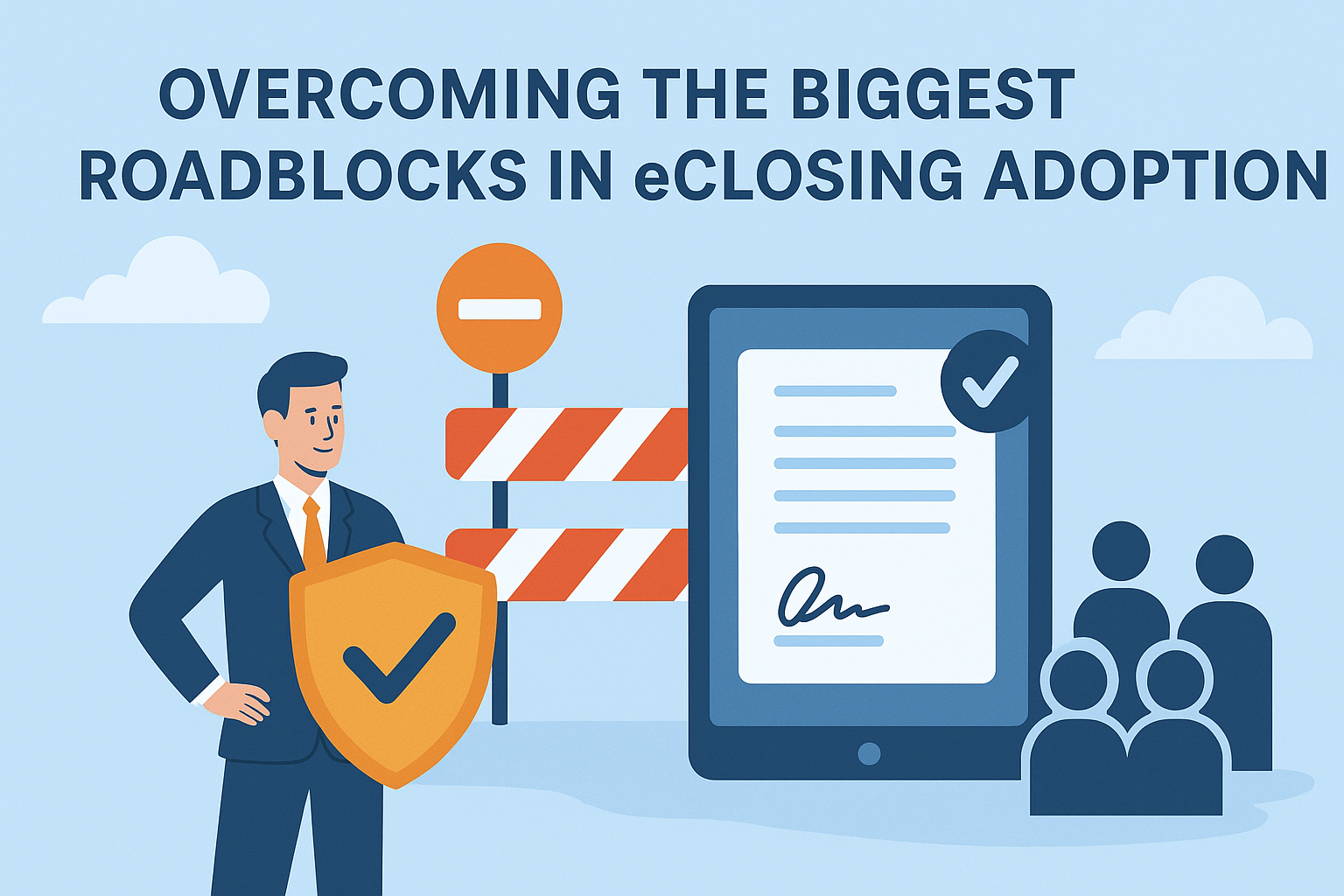
Overcoming the Biggest Roadblocks in eClosing Adoption
The mortgage industry is moving fast toward digital closings, but many lenders still struggle to fully adopt eClosings. While the benefits are obvious—faster closings, less paperwork, smoother borrower experience—the road to implementation comes with real challenges. The good news: every roadblock has a practical solution.
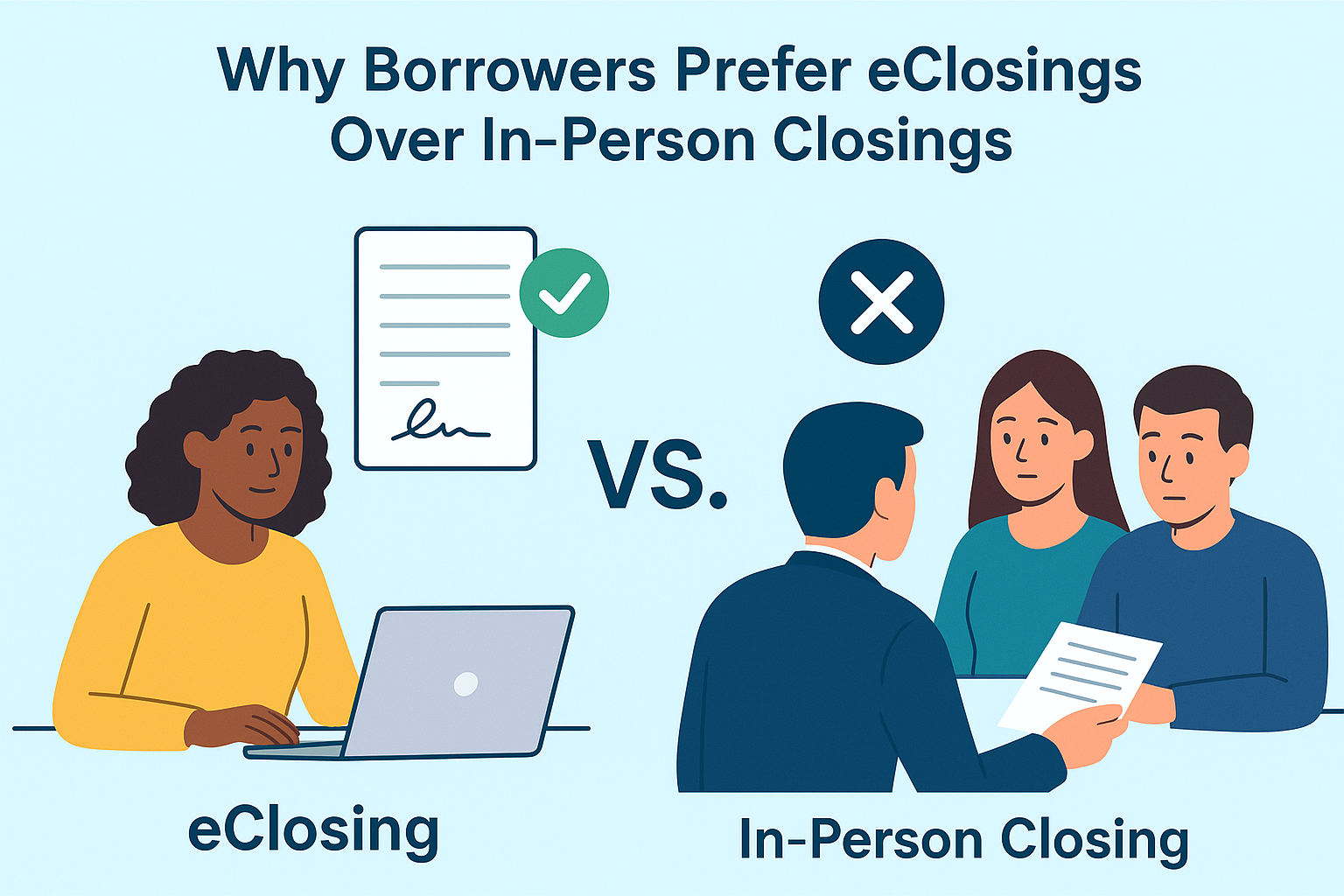
Why Borrowers Prefer eClosings Over In-Person Closings
For decades, closing on a home meant piles of paperwork, multiple appointments, and sitting in a title office for hours. Today, borrowers are choosing a simpler, faster alternative: eClosings.
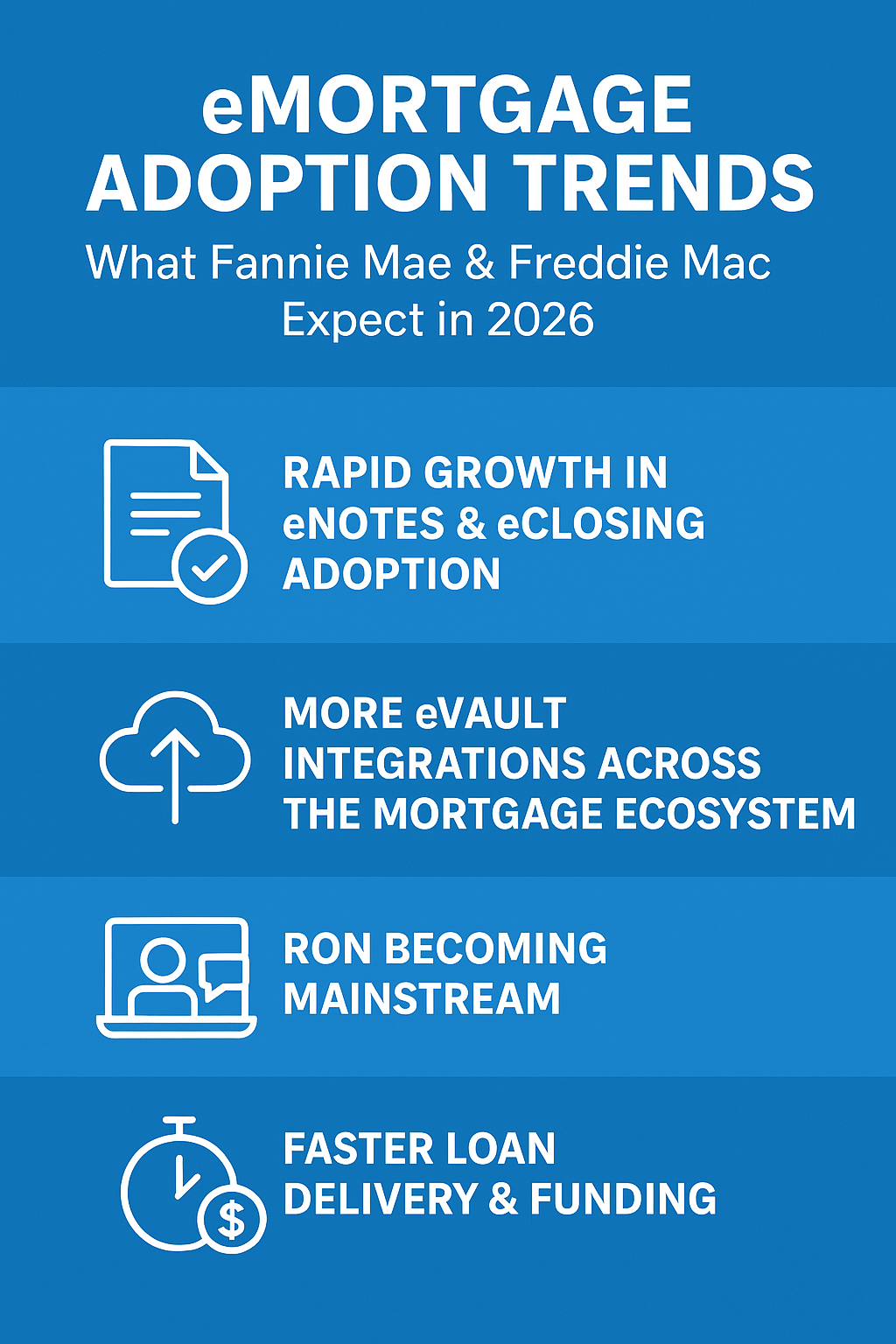
eMortgage Adoption Trends: What Fannie Mae & Freddie Mac Expect in 2026
The U.S. mortgage industry is rapidly shifting toward fully digital workflows, and by 2026, eMortgage adoption is expected to reach a new peak. Both Fannie Mae and Freddie Mac—the two major GSEs driving secondary-market standards—have been pushing lenders to modernize closing, documentation, and delivery processes.
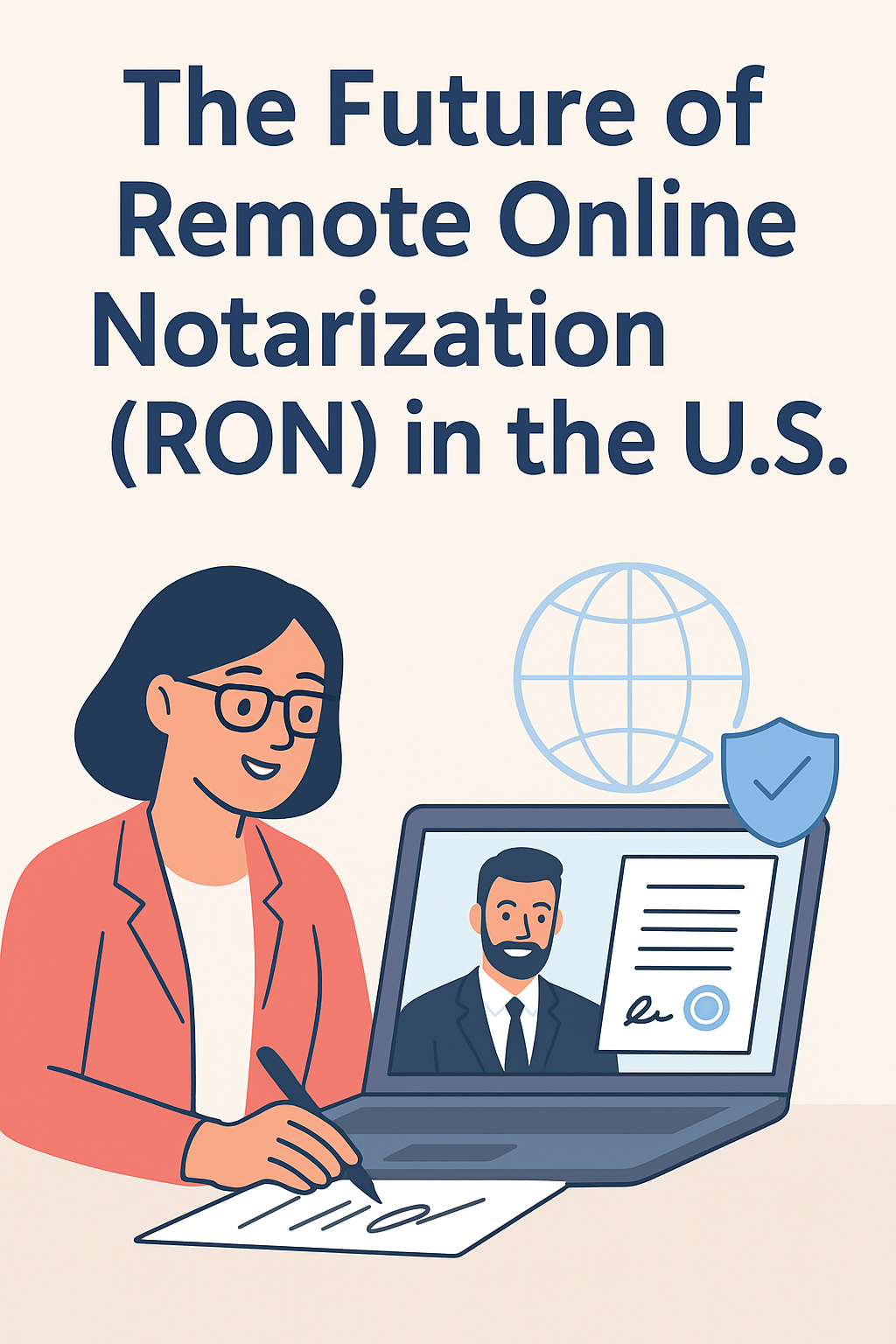
The Future of Remote Online Notarization (RON) in the U.S.
Remote Online Notarization (RON) is quickly becoming one of the most important digital tools in the U.S. mortgage and legal world. Instead of meeting a notary in person, people can now verify their identity, sign documents, and complete a notarization online through a secure video call.
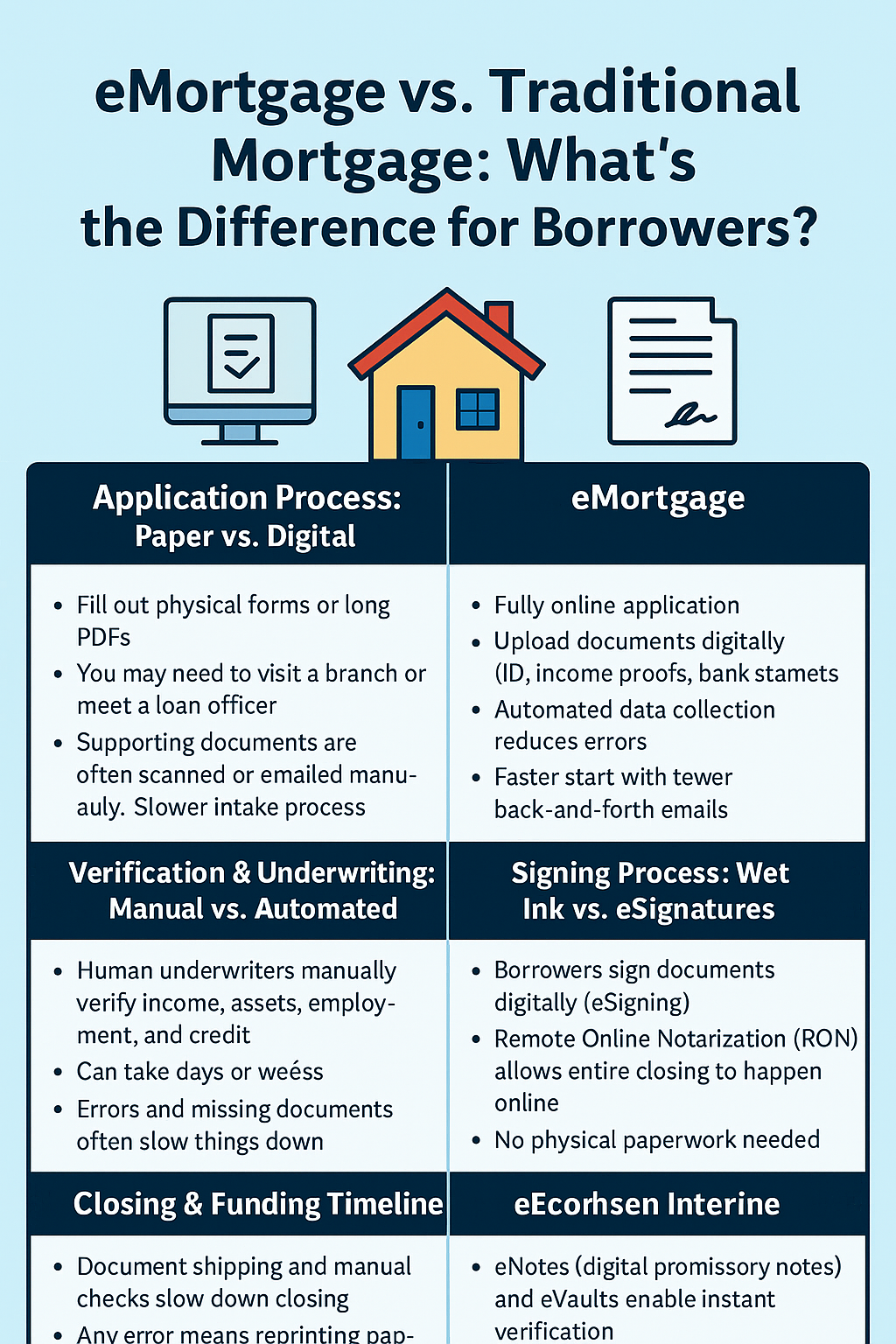
eMortgage vs. Traditional Mortgage: What’s the Difference for Borrowers?
The U.S. mortgage process has changed rapidly in the last few years. What used to involve stacks of paper, long processing times, and multiple in-person visits can now be completed digitally through an eMortgage. But what does this really mean for borrowers?
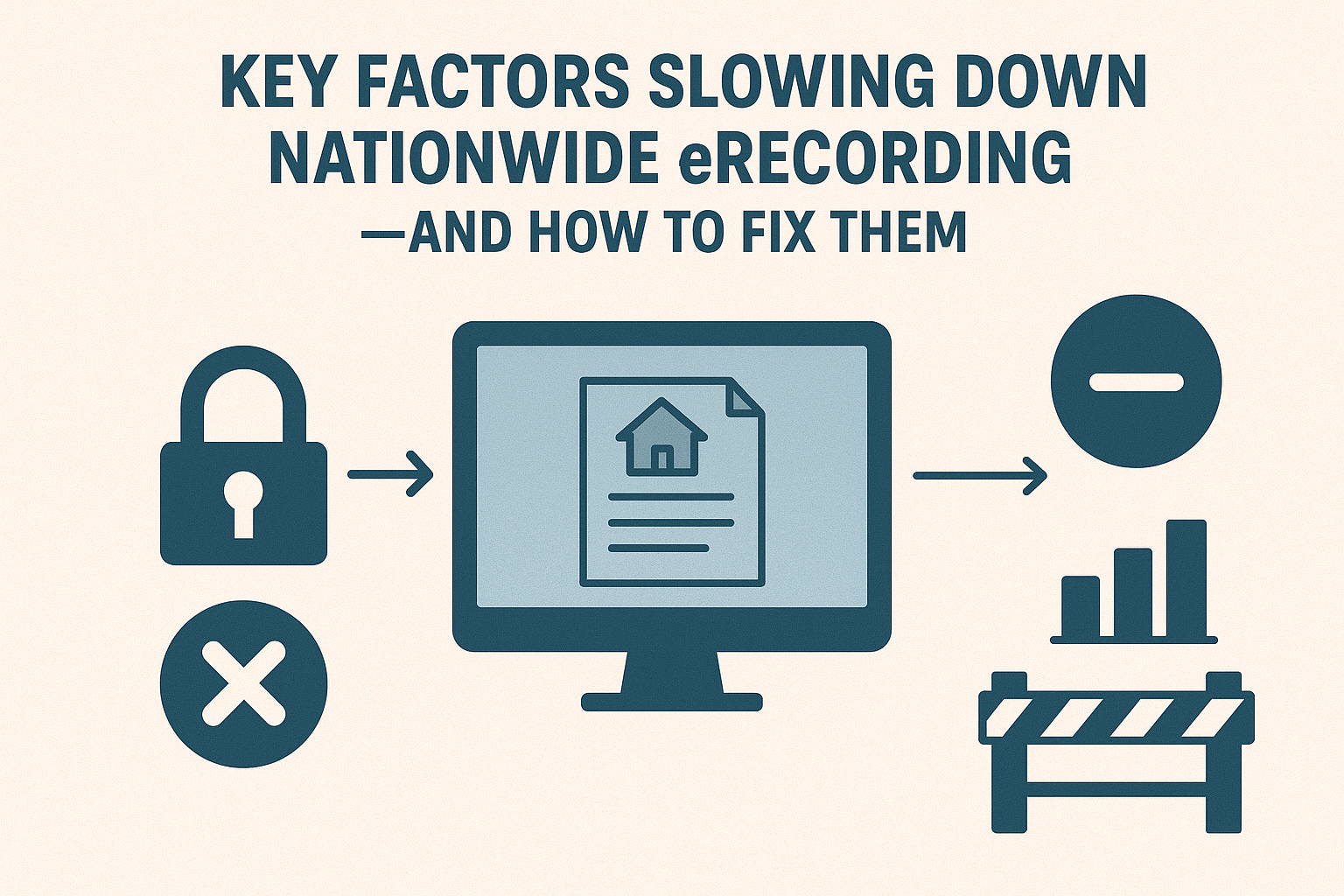
Key Factors Slowing Down Nationwide eRecording — and How to Fix Them
Even though eRecording has grown rapidly across the U.S., it’s still far from a fully nationwide standard. Many counties remain partially digital, fragmented, or fully paper-dependent—creating delays for lenders, title companies, and borrowers.